BLS Structural Steel BLS Structural Steel

Top Benefits of Metal Construction Materials for Buyers

Time:2026-10-13 Author:Mason
0%

Buying construction materials requires more than comparing purchase prices. It demands evidence about strength, service life, maintenance, and environmental performance. So, what are the benefits of metal construction materials for buyers? Metal offers a practical answer through predictable engineering, efficient installation, and long-term resilience.

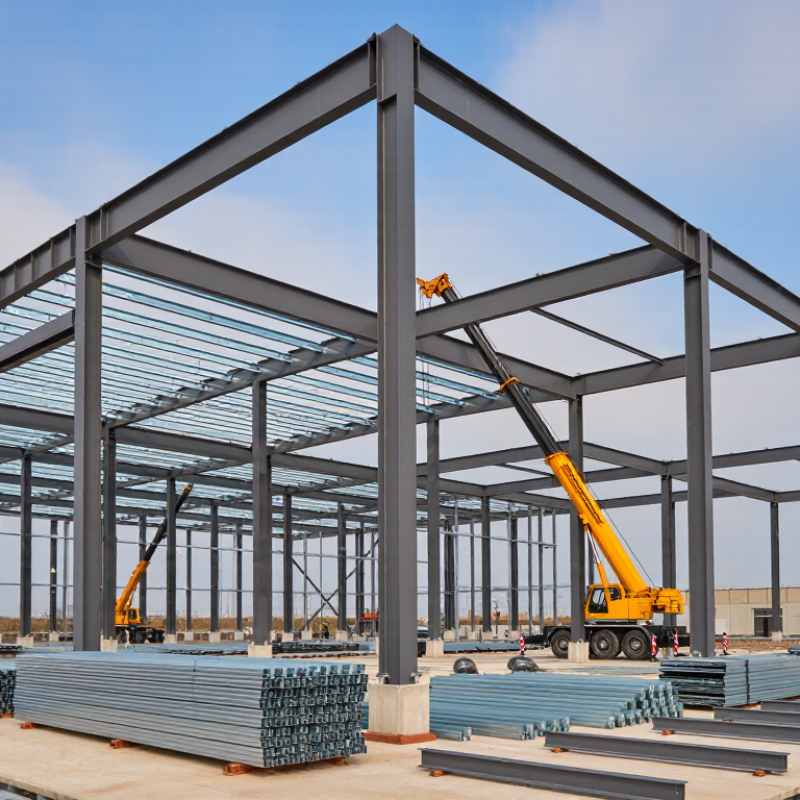
Steel and aluminum can span large areas with relatively light structural weight. This may reduce foundation loads, transport needs, and on-site handling. Prefabricated panels, beams, and frames can also shorten installation time. That matters when weather delays threaten a project schedule. The World Steel Association reported global crude steel production of approximately 1.9 billion tonnes in 2023, showing the material’s substantial industrial scale. Its technical standards and established supply chains support consistent procurement.

Durability is another important advantage. Properly coated steel can resist moisture, abrasion, pests, and impact in demanding environments. Metal roofing can also support rainwater collection and reflective finishes may reduce heat absorption. However, metal is not automatically sustainable. Corrosion protection, thermal bridging, transport distance, and manufacturing emissions still require careful review. The International Energy Agency identifies steel production as a major industrial emissions source. Buyers should therefore request Environmental Product Declarations and life-cycle data. UNEP’s 2024 Global Status Report states that buildings and construction consume about 32% of global energy and create 34% of global carbon emissions. Recycled content helps, but it does not replace responsible design. A reliable purchase decision balances upfront cost, maintenance records, regional climate, and verified performance. Small details matter. A cheaper panel can become expensive when coatings fail early.
Top Benefits of Metal Construction Materials for Buyers

What Metal Construction Materials Are and How They Are Used

Metal construction materials are factory-made products used to build, protect, or support structures. Common options include structural steel, galvanized steel, aluminum, and stainless steel. Steel beams carry heavy loads in warehouses, bridges, and multi-story buildings. Metal studs create straight interior walls. Roofing panels and cladding protect buildings from rain, wind, and sunlight.

These materials offer strength, predictable dimensions, and long service life. Their consistent size can reduce cutting waste during installation. Galvanized coatings help steel resist moisture, while aluminum remains useful where lower weight matters. Stainless steel suits demanding areas, such as kitchens or coastal facilities. However, no metal is perfect. Poorly sealed joints may still allow corrosion. Thermal movement can also create noise or stress. Buyers should review load requirements, coating thickness, fire performance, and local environmental conditions. An experienced engineer should verify structural choices before purchase.

Tips: Compare total lifecycle cost, not only the initial price. Request test reports, material grades, and maintenance guidance from reliable suppliers. Check edges, welds, and protective coatings when materials arrive. A small surface defect can become expensive later. Also, confirm that installers understand handling requirements. Metal can look simple, but careless storage may cause scratches, bending, or contamination. For coastal projects, I would choose corrosion-resistant protection even when the upfront cost feels uncomfortable. That decision is not always obvious.

Key Benefits of Metal Materials in Modern Construction

Metal materials bring practical advantages to modern construction. Their high strength-to-weight ratio supports longer spans with fewer interior columns. This can create more flexible rooms, cleaner layouts, and simpler future renovations. Factory-cut components also improve dimensional accuracy and reduce on-site waste. That matters on crowded sites. Metal framing often speeds assembly when drawings, deliveries, and connections are carefully coordinated.

Durability is another important benefit. Properly protected steel can resist impact, fire, insects, and many weather conditions. Aluminum performs well where low weight and corrosion resistance are priorities. However, metal is not maintenance-free. Exposed surfaces still need suitable coatings, drainage, and regular inspections. Poorly sealed joints can trap moisture and cause hidden corrosion. Experienced engineers check local climate, structural loads, fasteners, and fire requirements before selecting a material. Recycled metal can also reduce resource demand, although transport and manufacturing energy still deserve honest evaluation.

Tips: Ask for verified test data, not only attractive product claims. Check coating thickness and expected service conditions. Inspect connections around roofs, balconies, and drainage points. Keep a small maintenance record with dates and photographs. If a design depends on perfect installation, reconsider it. Real projects are rarely perfect. Build in access for repairs, because prevention is easier than replacement.

How Metal Options Compare with Traditional Building Materials

Metal construction materials can outperform traditional wood and masonry in speed, durability, and design flexibility. Steel frames offer consistent dimensions, which helps crews reduce cutting waste on site. They also resist termites, rot, and many forms of weather damage. The World Steel Association reports that roughly 680 million tonnes of steel are recycled globally each year. That circular advantage matters when buyers consider a building’s full service life.

Traditional materials still have practical strengths. Concrete provides thermal mass, while wood can offer easier field modifications and warmer interior finishes. Metal transfers heat quickly, so poor insulation can create cold bridges and higher energy bills. The U.S. Department of Energy notes that reflective cool roofs may reduce peak cooling demand by about 10–15 percent. However, that result depends on climate, roof color, insulation, and ventilation. Metal is not automatically greener. It may also require coatings, acoustic treatment, and fire protection. Those added systems can change the original budget.

Tips: Compare complete assemblies, not material prices alone. Ask for tested fire, thermal, acoustic, and corrosion data. Check recycled content and future recovery options. Leave room for maintenance. A cheaper frame can disappoint if fasteners corrode near the coast. Buyers should also question optimistic energy estimates. Real performance often depends more on installation quality than brochures suggest.

Top Benefits of Metal Construction Materials for Buyers - How Metal Options Compare with Traditional Building Materials

Evaluation Dimension Metal Construction Materials Traditional Wood Materials Masonry or Concrete Materials Buyer Relevance
Structural strength High strength-to-weight ratio; structural steel commonly has yield strengths of approximately fy = 250–550 MPa, depending on grade. Adequate for many residential applications, but strength and stiffness vary with species, grade, moisture, and defects. High compressive strength, but generally heavier and less efficient in tension unless reinforced. Metal can support large spans and higher loads with relatively slender structural members.
Weight and handling Steel is dense, but its high strength can reduce the total volume of structural material required. Lightweight and easy to cut, lift, and modify on site. Concrete and masonry are heavy and typically require more substantial foundations and lifting equipment. Lower structural material volume may simplify transportation and installation planning.
Dimensional stability Does not absorb moisture and is not vulnerable to biological decay; thermal expansion must be considered in design. Can shrink, swell, warp, or twist as moisture content changes. Generally stable after curing, but cracking and movement can occur because of shrinkage, temperature, or settlement. Metal offers predictable geometry when moisture-related movement is a major concern.
Resistance to pests and decay Unaffected by termites and rot; corrosion protection is required in aggressive or persistently damp environments. Can be damaged by termites, fungi, and prolonged moisture exposure if not properly protected. Not susceptible to termites or rot, although reinforcement corrosion and moisture-related deterioration may occur. Metal can reduce biological maintenance risks, provided the corrosion-control system is suitable.
Fire performance Non-combustible, but unprotected steel loses strength and stiffness as temperatures rise; fire-rated systems may be required. Combustible and requires fire-resistant assemblies, protective treatments, or additional enclosure depending on the application. Non-combustible and generally provides strong inherent fire resistance, subject to design and thickness requirements. Metal is advantageous for non-combustibility, but buyers should budget for required fire protection.
Construction speed Shop fabrication, prefabrication, and bolted or screwed connections can shorten on-site assembly time. Fast to assemble using widely available tools and established framing methods. Often involves formwork, curing, mortar work, or multiple construction stages. Metal may reduce site labor and weather exposure when components are accurately prefabricated.
Maintenance requirements Usually low after installation, but exposed surfaces require inspection for coating damage, water traps, and corrosion. May require periodic inspection for moisture, insects, cracking, coatings, and concealed decay. Generally low, but cracks, joint deterioration, water intrusion, and reinforcement corrosion should be monitored. Metal can offer predictable maintenance when detailing prevents water accumulation and galvanic contact.
Recyclability Steel and aluminum are recyclable materials; recovered metal can be remelted into new products, subject to collection and processing. Can be reused or recovered for energy, but recycling options depend on condition, coatings, adhesives, and local facilities. Often recyclable as aggregate or fill, but closed-loop recycling into equivalent structural products is more limited. Metal provides strong end-of-life recovery potential when components are separated and collected properly.
Design flexibility Suitable for long spans, modular layouts, curved elements, and prefabricated components; specialist fabrication may be needed. Highly adaptable for low-rise construction and easy field modifications. Excellent for mass, thermal inertia, and architectural form, but modifications after curing are more difficult. Metal is a strong option where open interiors, repeatable modules, or rapid changes are priorities.
Typical cost considerations Material prices can fluctuate with steel, aluminum, energy, and fabrication costs; savings may arise from speed, reduced waste, and lower maintenance. Often competitive for smaller buildings, but labor, moisture protection, and replacement costs affect the life-cycle total. May require higher logistics, foundation, formwork, and curing costs, while offering durability and thermal mass. Buyers should compare total installed and life-cycle costs rather than material price alone.
Best-fit applications Industrial buildings, warehouses, workshops, agricultural structures, modular construction, and projects requiring long spans. Low-rise housing, interior framing, small additions, and projects prioritizing simple field modification. Foundations, retaining structures, fire-resistant assemblies, high-mass walls, and projects requiring substantial durability. The preferred material depends on building use, climate, code requirements, budget, schedule, and maintenance strategy.

Note: Performance varies by material grade, coating system, design, climate, workmanship, building code, and service conditions. Cost and service-life comparisons should be verified for the specific project location and application.

Factors Buyers Should Assess Before Choosing Metal Products

Top Benefits of Metal Construction Materials for Buyers

Factors Buyers Should Assess Before Choosing Metal Products

Metal construction materials can offer strength, long service life, and predictable performance. However, buyers should assess more than the lowest purchase price. Start with the project’s load requirements, climate, expected lifespan, and installation conditions. A coastal site may need stronger corrosion protection than an inland warehouse. Small details matter.

Ask suppliers for material grades, thickness tolerances, test reports, and traceable mill certificates. These documents help confirm that the product matches the specification. Check whether coatings suit heat, moisture, chemicals, and ultraviolet exposure. A shiny surface is not proof of durability. It may hide weak preparation underneath.

Consider the full cost, not only the invoice. Transport, cutting, fasteners, maintenance, replacement, and labor can change the final budget. Review delivery schedules carefully. A delayed shipment can stop an entire installation crew. Buyers should also examine thermal movement, fire performance, recyclability, and compatibility with nearby materials. Some metals may react when placed against dissimilar materials without proper separation.

Independent engineering review is valuable for complex structures. Qualified professionals can verify load calculations, connection details, and local code requirements. Site experience also shows that installation errors can reduce the benefits of excellent material. One missed protective layer may create rust at a joint. That risk is easy to underestimate. A careful buyer compares evidence, asks uncomfortable questions, and accepts that the cheapest option may not be the most reliable.

Top Benefits of Metal Construction Materials for Buyers

Representative yield-strength values show how commonly specified construction metals compare when buyers assess structural performance, durability, weight, and lifecycle value.

Carbon steel and galvanized steel provide high structural strength and broad availability. Stainless steel offers strong corrosion resistance, while 6061-T6 aluminum delivers a high strength-to-weight ratio at approximately one-third the density of steel. Actual values vary by alloy, product form, thickness, and applicable standard, so buyers should confirm certified mill data before purchasing.

Sustainable and Long-Term Value of Metal Construction Materials

Metal construction materials can deliver sustainable value when buyers evaluate their full service life. Steel and aluminum often contain recycled content, reducing demand for newly extracted resources. Their strength also supports lighter structures, fewer replacements, and less construction waste. A metal roof may withstand heavy rain, snow, and strong winds for decades with proper installation. That durability can protect budgets from repeated repair costs.

Metal is not automatically sustainable. Producing it requires significant energy, and poorly designed assemblies may create thermal bridges. Those weak points can increase heating and cooling demand. Buyers should review recycled content, environmental product declarations, expected lifespan, coating durability, and local recycling options. Reliable suppliers should provide clear testing records and maintenance guidance. I have found that transparent documentation often matters more than impressive claims.

Tips: Compare lifetime cost, not only the purchase price. Ask how the material performs after twenty years. Check fasteners, joints, drainage paths, and protective finishes. A small rust mark near a cut edge can become an expensive problem if ignored. Choose designs that allow damaged panels to be replaced individually. Also, request installation details that reduce heat loss and moisture buildup. These choices may seem minor. They shape long-term value.

FAQS

How do metal construction materials compare with wood and masonry?

Metal can provide faster installation, consistent dimensions, and strong durability. Wood allows easier field changes, while masonry offers useful thermal mass. No material wins everywhere.

Can metal materials reduce construction waste?

Consistent steel dimensions can reduce cutting waste on site. Less scrap may simplify cleanup and material planning. Actual savings depend on accurate drawings and careful installation.

Are metal buildings automatically more energy efficient?

No. Metal transfers heat quickly, so poor insulation can create cold bridges. This may increase heating and cooling costs. Insulation quality matters greatly.

What should buyers include when calculating the real cost?

Compare transport, labor, cutting, fasteners, maintenance, and replacement costs. A low invoice can hide expensive site work. The cheapest frame may disappoint later.

How does climate affect the choice of metal products?

Coastal locations may require stronger corrosion protection. Moisture, chemicals, heat, and ultraviolet exposure can damage unsuitable coatings. A shiny surface proves very little.

Which documents should buyers request from suppliers?

Request material grades, thickness tolerances, test reports, and traceable mill certificates. Ask for fire, thermal, acoustic, and corrosion data. Missing evidence deserves careful questioning.

Why is installation quality so important?

Incorrect connections or missing protective layers can reduce long-term performance. One unprotected joint may develop rust. Good materials cannot fully correct poor workmanship.

Can metal materials support recycling goals?

Steel can be recycled at the end of a building’s service life. Buyers should check recycled content and future recovery options. Recycling is helpful, but it does not make every project automatically sustainable.

When is an independent engineering review useful?

It is valuable for complex structures or unusual site conditions. Qualified professionals can check loads, connections, and local requirements. Brochures are not enough.

Conclusion

Metal construction materials include products such as steel framing, metal roofing, wall panels, structural beams, and fastening components used in residential, commercial, and industrial projects. They are valued for their strength, dimensional stability, and versatility, allowing builders to create reliable structures with efficient installation methods. When asking “what are the benefits of metal construction materials,” buyers should consider their durability, resistance to fire, pests, moisture, and harsh weather, as well as their ability to support modern design and construction requirements.

Compared with many traditional materials, metal options can provide greater consistency, longer service life, and reduced maintenance when properly selected and protected. However, buyers should assess product quality, coating or corrosion protection, load requirements, local climate, installation needs, availability, and total project cost rather than focusing only on the purchase price. Metal can also offer sustainable, long-term value because many products contain recycled content, generate limited waste during fabrication, and may be recyclable at the end of their useful life.

Mason

Mason

Mason is a seasoned marketing professional with a deep expertise in the company's offerings and a passion for driving brand awareness. With a strong background in digital marketing strategies, he has an innate ability to connect with diverse audiences and effectively communicate product benefits.......